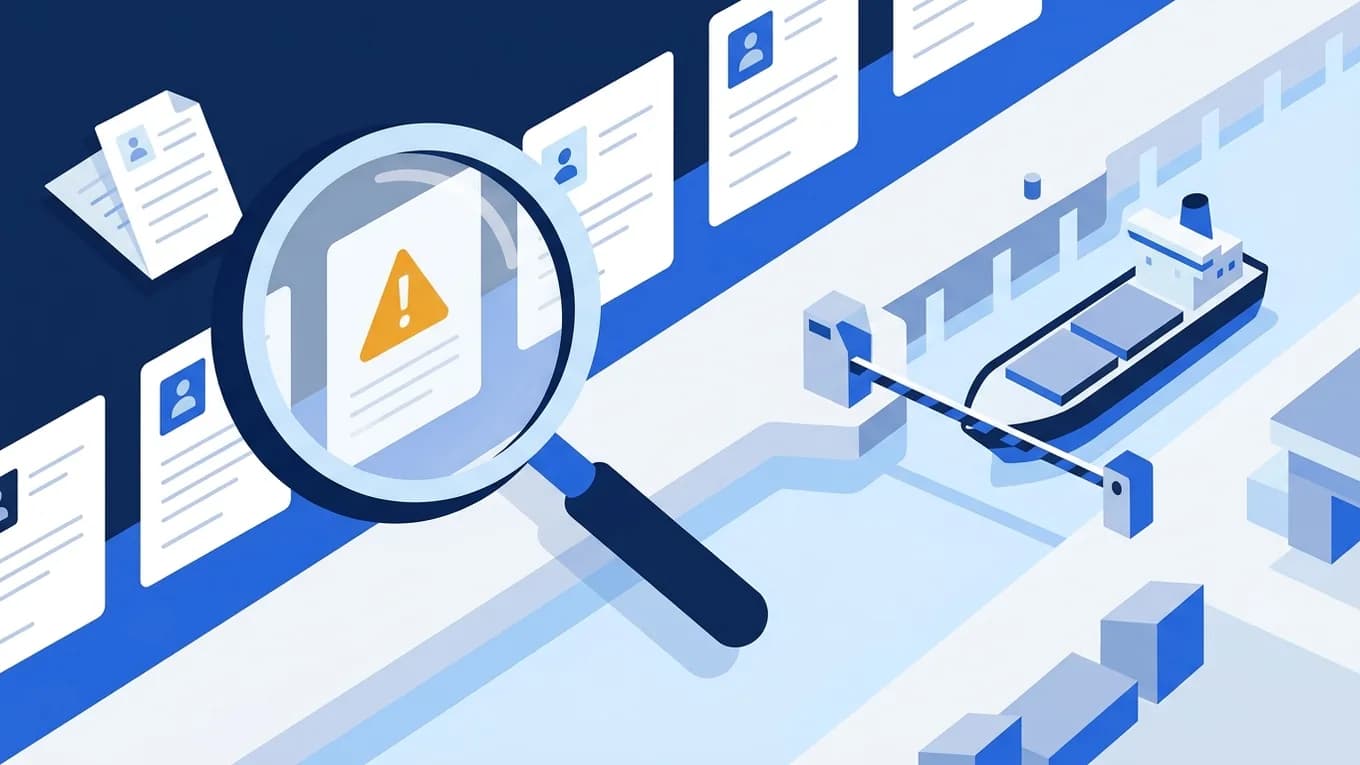
Why check, and which lists
A sanctions list names people, companies, ships and aircraft you may not deal with, or may deal with only under a licence. Your bank asks for a sanctions declaration with export documents and import payments, so check before you sign the deal, not after you ship.
- UN: the Security Council's consolidated list, which brings together the names under its sanctions regimes.
- US: OFAC's Specially Designated Nationals (SDN) list, and the US government's Consolidated Screening List, which puts the Commerce and State departments' export-control lists alongside Treasury's sanctions lists.
- UK: the UK Sanctions List, published by the Foreign, Commonwealth and Development Office. It is now the only source of UK designations; the older OFSI list closed on 28 January 2026.
- EU: the consolidated list of persons, groups and entities subject to EU financial sanctions, kept by the European Commission.
Our company check searches the UN, US and UK lists. If an EU buyer, bank or carrier is part of the deal, check the EU list as well.
What a match means
A match is a question, not an answer. The US government says a match may mean the deal is prohibited, that it needs a licence, or that you must look harder at the end use and the end user. Before you act, read the official entry on the list itself.
- Under US rules, a company owned 50% or more in total, directly or indirectly, by blocked persons is itself treated as blocked, even if its own name is on no list.
- Lists name ships too, so check the vessel if the route or the buyer's instructions look unusual.
False positives
Screening tools compare spellings, so common words and names throw up look-alikes. Every hit still needs checking:
- Compare the full name, not just one word of it.
- Compare the country and address on the official entry with your party's.
- Compare any dates of birth, registration numbers, ship numbers or other identifiers.
- If they differ, write down why you cleared the hit. If they match, or you cannot tell, stop and get advice before going further.
Watch out: The mistake people make is screening only the buyer. Screen the consignee, the notify party, the buyer's bank and any agent in between too, and screen again when any of them changes.
Dual-use goods and SCOMET
Some goods need an export licence because of what they could be used for, not who buys them. India's list is SCOMET: Special Chemicals, Organisms, Materials, Equipment and Technologies. It covers dual-use items, munitions and nuclear-related items, including software and technology. Under DGFT's rules they can be exported only against an export authorisation, unless prohibited or specifically exempted. The list is Appendix 3 to Schedule 2 of ITC(HS). You apply to DGFT online, and an inter-ministerial working group considers the application. You also need the buyer's end-user certificate in DGFT's format, or a legal undertaking for a temporary export.
There is also a catch-all rule. If DGFT tells you in writing, or you know or have reason to believe, that an item not on the SCOMET list could be used for weapons of mass destruction, missiles or military use, you must apply for a SCOMET authorisation before exporting it.
What to keep on file
- The date of each check, the lists searched, the names and spellings you searched, and the result.
- How you cleared any hit, and who decided.
- The buyer's details you relied on: registration, address, owners, and its LEI if it has one.
- Any end-use statement from the buyer, and the SCOMET authorisation if one was needed.
- The sanctions declaration you gave your bank.
Lists change, so screen at the order, again before you ship, and again before you accept payment.
In short
- Screen every party in the deal, not just the buyer, against the UN, US, UK and, where relevant, EU lists.
- A match needs checking against the official entry; clearing a false positive needs a recorded reason.
- Under US rules, a company 50% or more owned by blocked persons is treated as blocked too.
- SCOMET items need a DGFT export authorisation, and the catch-all rule can reach items not on the list.
Try it on our data
Check yourself
Words in this lesson
Sources
- US trade.gov: Consolidated Screening List
- OFAC: FAQ 401, the 50 Percent Rule
- UK FCDO: The UK Sanctions List
- European Commission: EU sanctions and the consolidated list
- DGFT: Handbook of Procedures 2023, Chapter 10 (SCOMET)
Facts checked against these sources on
Trade Academy is education, not legal, tax or customs advice. Rules and rates change by notification: check the live source, or ask a licensed customs broker, before you act.