Containers and TEU
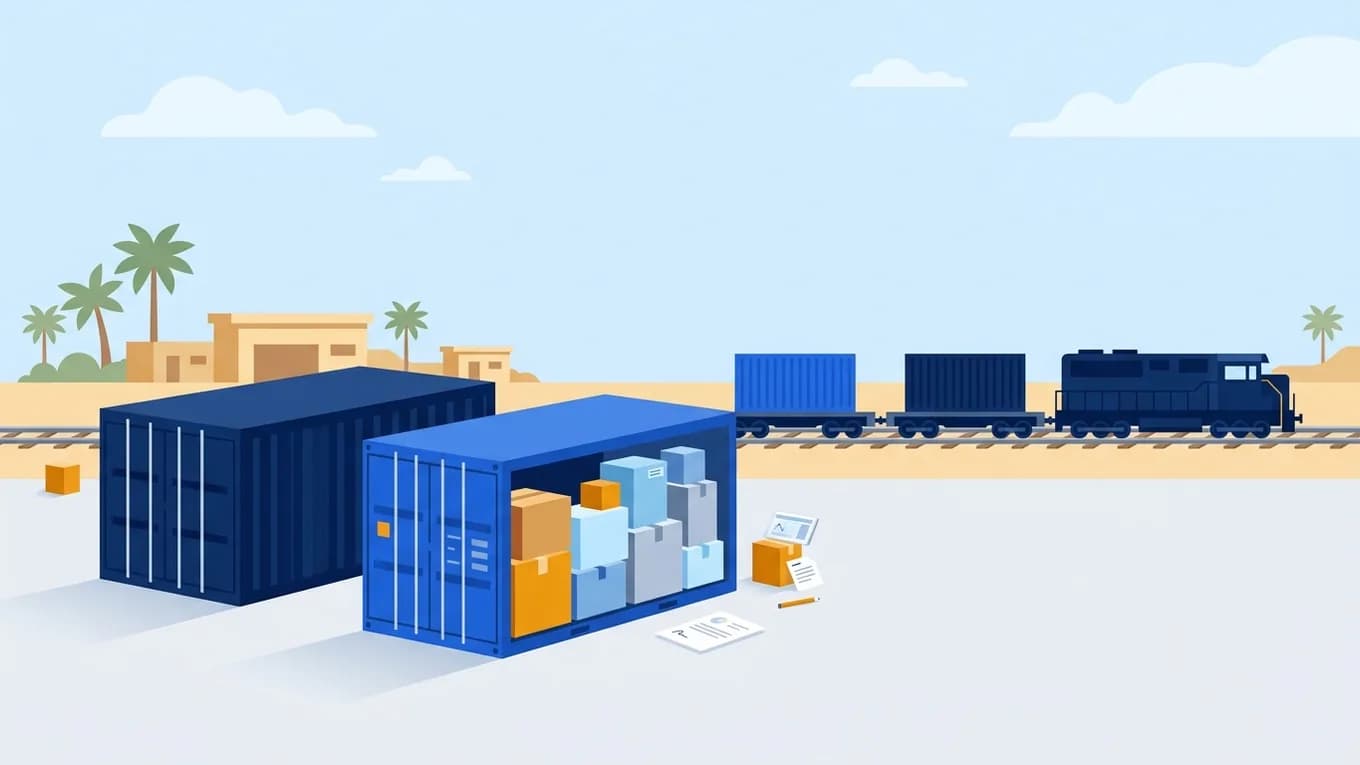
Most sea cargo moves in steel containers of standard sizes. The two you will book most are the 20-foot and the 40-foot. Ports and shipping lines count them in TEU, twenty-foot equivalent units: a 20 ft container is 1 TEU and a 40 ft is 2 TEU.
Heavy goods usually reach a container's weight limit before they fill its space, while light, bulky goods fill the space first. Ask the line for the weight limit of the container you book, not just its size.
- A buyer takes 3 containers of 40 ft and 2 of 20 ft every month.
- That is (3 × 2) + (2 × 1) = 8 TEU a month.
- Port and shipping figures are given in TEU, so this is how your volume compares with them.
FCL or LCL
- FCL, full container load: you book the whole container for your goods alone and pay for it whether or not you fill it. It is packed, sealed and carried as one unit.
- LCL, less than container load: you pay for the space your cargo takes, and a consolidator packs it into a shared container with other shippers' goods.
LCL suits small or trial shipments. It takes longer, because the container is packed at one container freight station and unpacked at another, and your cargo is handled more. FCL suits shipments that fill most of a container, or goods that should be handled as little as possible.
Watch out: The mistake people make is comparing only the sea freight. LCL has handling charges at both ends, and an FCL import left too long at the port or a CFS runs up storage and container charges. Get every charge up to your Incoterm point in writing before you book.
ICD: a customs port inland
An inland container depot is a dry port away from the sea. Under the Customs Act, a place appointed as an ICD counts as a customs port, so goods are cleared there just as at a sea port. Containers then travel between the ICD and the sea port by rail or road.
For an exporter far from the coast, an ICD near the factory means you can file the shipping bill, get the Let Export Order and hand over the container close to home. For an importer, the goods can be carried through to the ICD and the bill of entry filed there.
CFS: where cargo is packed and unpacked
A container freight station is a customs area linked to a port or an ICD, where cargo is packed into and taken out of containers, stored and examined. The Customs Act counts any area where goods are kept before clearance as a customs area.
- LCL cargo passes through a CFS at both ends: export cargo is consolidated there, and import cargo is unpacked there.
- An FCL import may also be moved from the port to a CFS, where customs examines it and you take delivery.
- Each CFS charges for handling and storage, so ask your customs broker which CFS your container will go to.
Before you book
- Work out the volume and weight of your cargo from the packing list, and ask your forwarder whether it should go FCL or LCL.
- Decide where you will clear customs: at the sea port, or at an ICD near you.
- For a packed container going by sea, the shipper must give its verified gross mass (VGM) before loading. Under the international SOLAS rules, a container without one is not loaded.
- Ask how many free days the line and the CFS allow before storage and container charges start.
- Find a customs broker who works at that port or ICD.
In short
- FCL is a whole container for your goods; LCL is space in a shared one.
- Containers are counted in TEU: a 20 ft container is 1 TEU and a 40 ft is 2 TEU.
- An ICD is an inland customs port: you can clear goods there instead of at the sea port.
- A CFS is a customs area where LCL cargo is packed and unpacked and containers can be examined.
- A packed container going by sea needs its verified gross mass before it is loaded.
Try it on our data
Check yourself
Words in this lesson
Sources
- CBIC: Customs Act, 1962 (section 2, customs area and customs port)
- IMO: Verification of the gross mass of a packed container
- Statistics Netherlands (CBS): TEU definition
- ICC: Incoterms 2020 checklist (containers and FCA)
Facts checked against these sources on
Trade Academy is education, not legal, tax or customs advice. Rules and rates change by notification: check the live source, or ask a licensed customs broker, before you act.