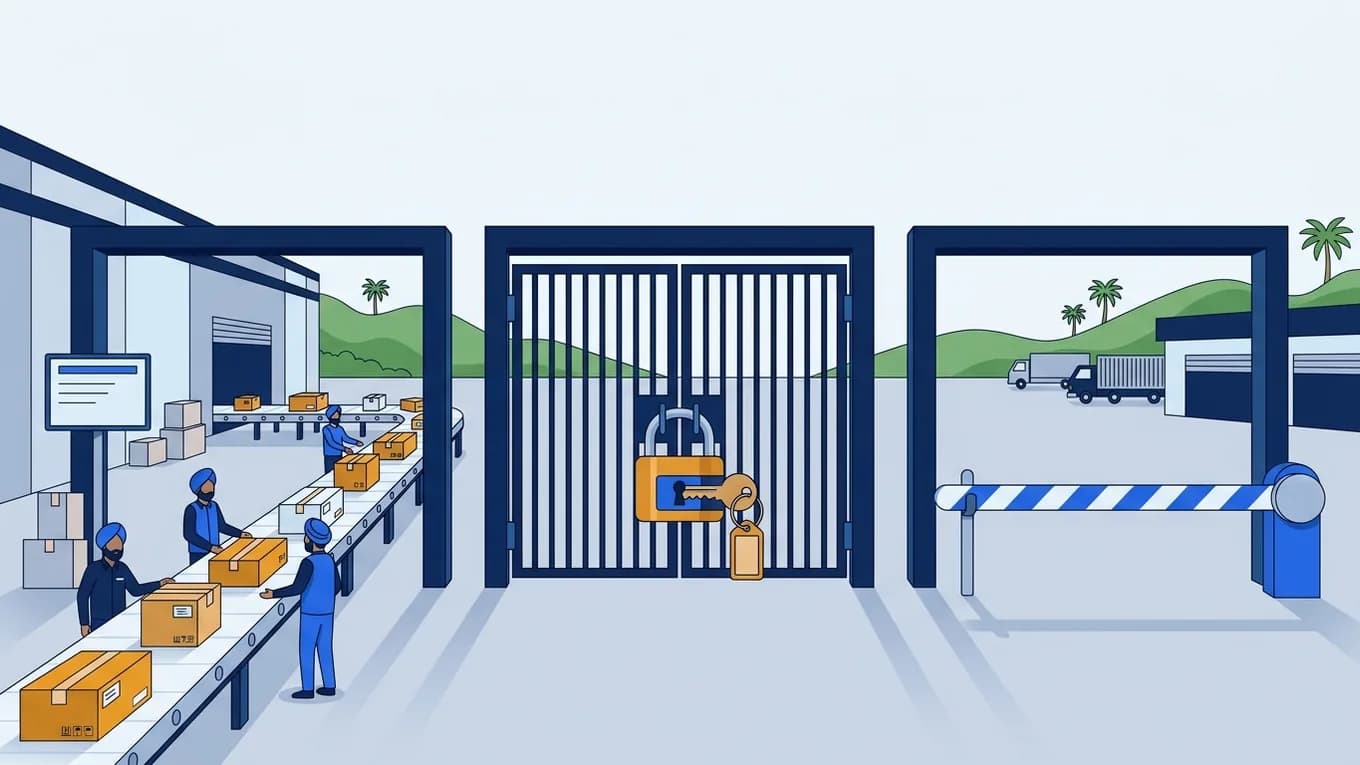
Two schedules, one for each direction
Whether you may trade a product at all is set by DGFT in ITC(HS), India's import and export policy for every 8-digit code. Schedule 1 is the import policy and Schedule 2 the export policy. The current edition is ITC(HS) 2022, which DGFT amends by notification. Each schedule also has general notes that apply across it.
Its first six digits match the HS code used worldwide, and India adds two more. These 8-digit codes follow the same system customs uses.
Duty and policy are separate questions. Duty comes from the Customs Tariff and CBIC's notifications; permission comes from DGFT. A product can pay little duty and still need a licence, or pay high duty and be completely free to import.
Free, restricted, prohibited and STE
Each code's policy column shows one of four regimes:
- Free: you may import or export without a licence from DGFT, subject to any policy condition and to other laws.
- Restricted: you need a licence, which DGFT calls an authorisation.
- Prohibited: the goods may not be imported or exported. For exports, DGFT says a licence will not be given in the normal course.
- STE: only named state trading enterprises may import or export the goods, on the conditions in the Foreign Trade Policy.
DGFT's website lets you look up a code's policy directly, and DGFT publishes separate lists of restricted and prohibited items for imports and for exports. Strategic goods and technology on its SCOMET list need an export authorisation of their own.
Watch out: Free does not mean no rules. DGFT's import policy says every import must also meet the domestic laws, technical standards and safety and environmental norms that apply to goods made in India. A free item can still need BIS certification, covered in the previous lesson.
Policy conditions
Many codes carry a policy condition, in their own column or in the notes at the end of the chapter. DGFT's own guide says that column does not list every condition: other conditions and other laws can still apply.
Conditions take many forms. One recent kind is a minimum import price: on 30 September 2026, DGFT extended minimum import price conditions on certain items in Chapters 29 and 48.
- Suppose a code is free to import only at a price of at least USD 500 per tonne. The condition and the figures are illustrative.
- An invoice at USD 520 per tonne meets it.
- An invoice at USD 480 per tonne does not, so the goods cannot be imported under the free policy, however low the duty.
Licences and authorisations
For a restricted item, you apply online to DGFT headquarters for an import or export authorisation, with the documents its Handbook of Procedures lists. DGFT, or a regional authority it empowers, grants it, and may take advice from its EXIM Facilitation Committee, which brings in the technical authorities and ministries concerned.
- Unless it says otherwise, an import authorisation for a restricted item is valid for 18 months from issue, and an export authorisation for 24 months.
- An authorisation can name the port the goods must go through.
- Apply before you commit to a shipment, since how long a decision takes is not in your hands.
How to check your code
- Find your exact 8-digit code.
- Open Schedule 1 for an import or Schedule 2 for an export, and read the policy and the policy condition for that code.
- Read the chapter's notes and the general notes to that schedule.
- Check DGFT's notifications since the last update, because DGFT amends the policy by notification.
- If the code is restricted, apply for an authorisation before you ship. If it is STE, deal through the named enterprise.
In short
- DGFT's ITC(HS) sets import policy in Schedule 1 and export policy in Schedule 2, code by code.
- Each code is free, restricted, prohibited or STE.
- Restricted goods need a DGFT authorisation; free goods must still meet policy conditions and other laws.
- Duty and policy are separate: check both for every code.
Try it on our data
Check yourself
Words in this lesson
Sources
- DGFT: ITC(HS) import and export policy
- DGFT: How to read the import policy (Schedule 1)
- DGFT: How to read the export policy (Schedule 2)
- DGFT: Handbook of Procedures, Chapter 2 (restricted items, authorisations)
- DGFT: Notifications
Facts checked against these sources on
Trade Academy is education, not legal, tax or customs advice. Rules and rates change by notification: check the live source, or ask a licensed customs broker, before you act.