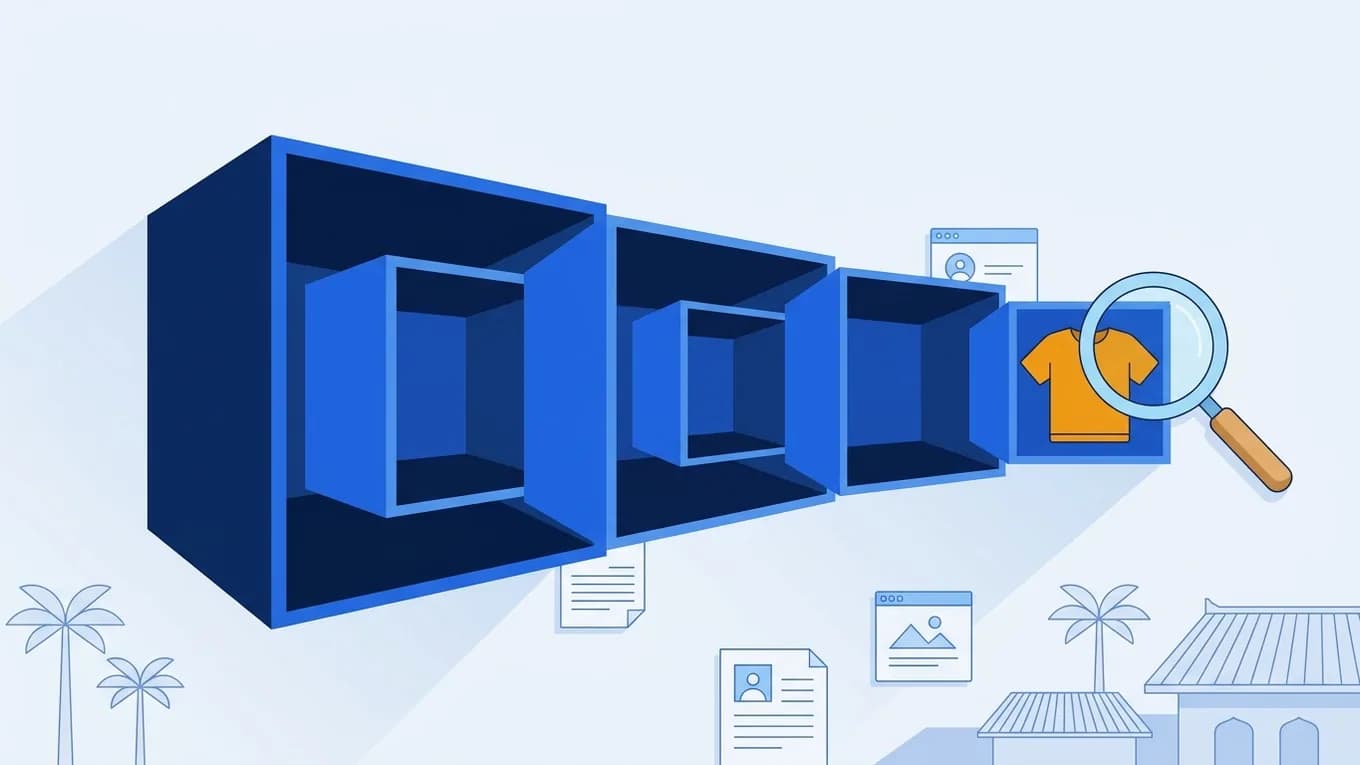
One code, four levels
Every product in trade has an HS code. The World Customs Organization (WCO) keeps the Harmonized System. It groups goods into 21 sections and chapters numbered 1 to 97; chapter 77 is reserved for future use, and 98 and 99 are left for each country's own use. India adds two digits of its own.
- 2 digits, the Chapter: 61 is clothing that is knitted or crocheted.
- 4 digits, the heading: 6109 is T-shirts, singlets and other vests, knitted or crocheted.
- 6 digits, the subheading: 6109.10 is the cotton ones. These six digits are the same in every country that uses the HS.
- 8 digits, India's tariff line: 6109 10 00. Indian duty and DGFT's import and export policy are set at this level.
The six rules customs uses
Classification is not a search for the words that sound closest. It follows the General Rules for the Interpretation of the Harmonized System, which India's tariff also uses. In plain words:
- Rule 1: section and chapter titles are only a guide. The legal answer comes from the wording of the headings and the section and chapter notes.
- Rule 2: an unfinished or unassembled article goes where the finished article goes, if it already has the finished article's essential character. A heading for a material also covers mixtures of it with other materials.
- Rule 3: if two headings fit, take the most specific. If that does not settle it, classify by the material or part that gives the goods their essential character. Failing that, take the heading that comes last in number.
- Rule 4: goods that fit nowhere go with the goods they are most like.
- Rule 5: a fitted case sold with its article, such as a camera case, goes with the article, and normal packing goes with the goods.
- Rule 6: choose the subheading the same way, comparing only subheadings at the same level.
Apply the rules in order. Many products are settled by Rule 1 alone.
Read the notes before the headings
Section and chapter notes often bring goods in or keep them out, whatever a heading seems to say. Two notes matter for T-shirts:
- Note 1 to Chapter 61: the chapter covers only knitted or crocheted articles. A woven shirt goes to Chapter 62.
- Note 5 to Chapter 61: heading 6109 does not cover garments with a drawstring, a ribbed waistband or other tightening at the bottom. A knitted top like that belongs in another heading.
- The goods: a short-sleeved T-shirt, knitted, 100% cotton, plain hem.
- Chapter: knitted clothing, so Chapter 61 (Note 1), not Chapter 62, which is for clothing that is not knitted.
- Heading: 6109, T-shirts, singlets and other vests. Note 5 does not shut it out, because the hem has no tightening.
- Subheading: 6109.10, of cotton (Rule 6).
- Indian tariff line: 6109 10 00.
- The same T-shirt in 60% cotton and 40% polyester: a Section XI subheading note treats it as made wholly of the textile that is heaviest by weight, so it stays in 6109.10.
When you are unsure: an advance ruling
If the code decides your duty and you cannot be sure of it, you can ask for an advance ruling before you import. Under sections 28E to 28M of the Customs Act, the Customs Authority for Advance Rulings answers written questions on classification, valuation principles, whether an exemption notification applies, origin and some other matters.
- You can apply if you hold an IEC, if you export goods to India, or if you show the Authority a good reason.
- The ruling binds you and the customs officers dealing with your imports. It does not bind anyone else.
- It stays valid for five years, or until the law or the facts it rests on change, whichever comes first.
Watch out: The most common mistake is to copy a code from the supplier's invoice or an old shipment and never check it. A wrong code can mean the wrong duty, a licence nobody applied for, and a reassessment with penalties. The code on your bill of entry is your declaration, not the supplier's.
Codes and rates change
The WCO revises the HS every few years. Its next edition, HS 2028, comes into force on 1 January 2028 and changes many subheadings. Whenever the tariff changes, check your code again, and never assume that last year's code, duty or GST rate still applies.
GST rates are also set by code, and sometimes by price as well. For knitted clothing the GST rate depends on the sale value of each piece, so two shirts with the same code can pay different IGST. Our HS code tool shows the rule in force today.
In short
- An HS code narrows down in steps: chapter (2 digits), heading (4), subheading (6) and India's tariff line (8).
- The legal answer comes from the wording of the headings and the notes, applied through six rules in order.
- Notes can bring goods in or keep them out, as Note 5 to Chapter 61 does for T-shirts.
- An advance ruling gives you a binding answer before you import.
- The code on your bill of entry is your declaration: check it yourself.
Try it on our data
Check yourself
Words in this lesson
Sources
- WCO: General Rules for the Interpretation of the Harmonized System (HS 2022)
- WCO: HS 2022, Chapter 61 (knitted or crocheted apparel), notes and headings
- WCO: HS 2022, Section XI (textiles), section and subheading notes
- WCO: HS Nomenclature 2028 edition
- CBIC Tax Information Portal: Customs Act 1962, sections 28E to 28M (advance rulings), as amended by the Finance Act 2026
Facts checked against these sources on
Trade Academy is education, not legal, tax or customs advice. Rules and rates change by notification: check the live source, or ask a licensed customs broker, before you act.