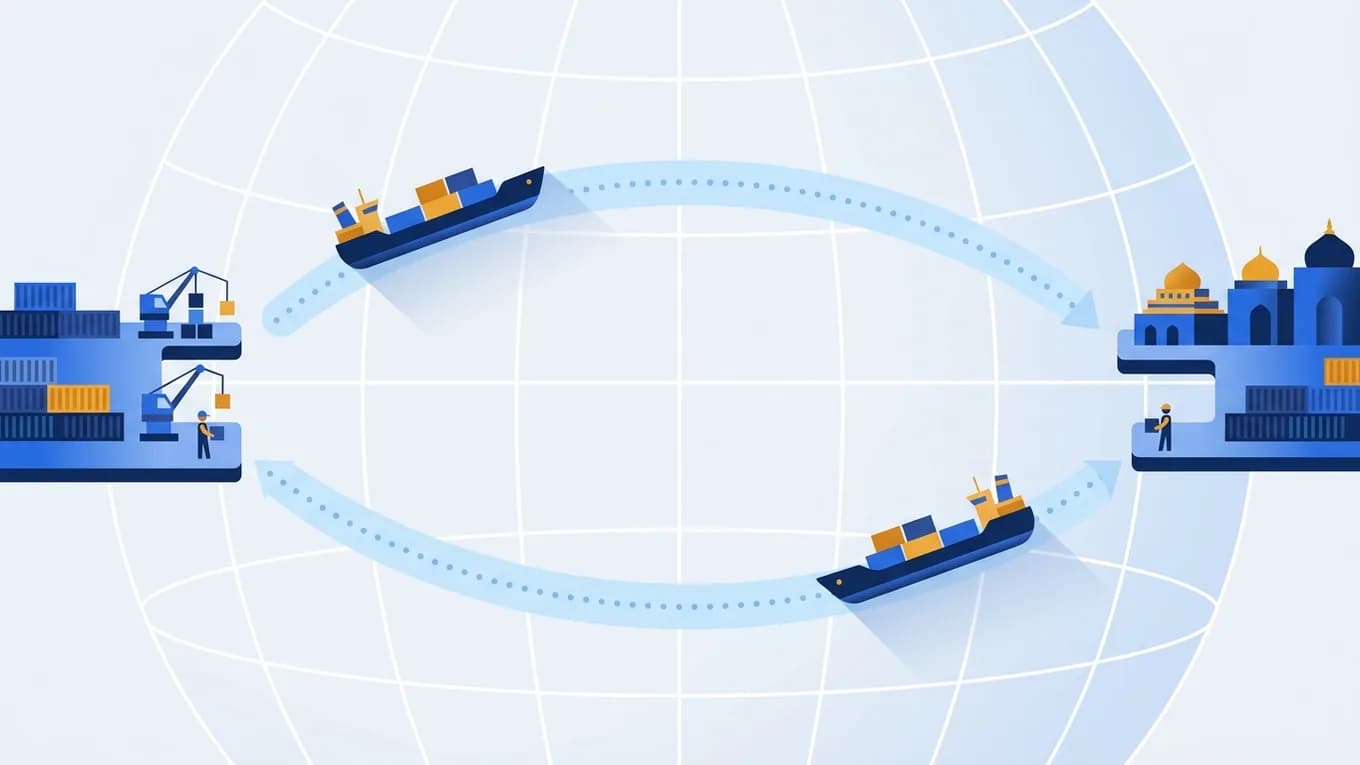
Two journeys, the same pieces
An import brings goods into India; an export sends them out. Both journeys use the same pieces: a buyer and a seller in two countries, a contract, a ship or a plane, a set of documents, Indian customs, and a bank that moves the money.
Before either journey, most businesses need an IEC from DGFT. It is the number customs and your bank use to identify you as a trader.
How an import works
- You find a supplier abroad and agree the product, the price and the Incoterm, which says who pays for freight and insurance and where the risk passes to you.
- The supplier ships the goods and sends the documents: the commercial invoice, the packing list, and the bill of lading for sea or the air waybill for air.
- When the goods reach an Indian port, airport or inland container depot, you or your customs broker file a bill of entry on ICEGATE.
- Customs checks the HS code and the value, and works out the duty: basic customs duty, social welfare surcharge, IGST and any other duty on the product.
- You pay the duty online. Customs may examine the goods; once satisfied, it gives out of charge and you can take them away.
- You pay the supplier through your bank, quoting the right purpose code.
Watch out: Duty is worked out on the value of the goods including freight and insurance to India (CIF), not on the price you see on the supplier's website. Check the live rate for your code before you agree a price.
How an export works
- You find a buyer abroad and agree the product, the price, the Incoterm and how you will be paid: in advance, by letter of credit, or against documents.
- You pack the goods and prepare the invoice and packing list. Most exporters file a letter of undertaking for GST so they can export without paying IGST.
- You or your customs broker file a shipping bill on ICEGATE.
- Customs checks the goods and papers and gives the Let Export Order. Only then can the goods be loaded.
- The shipping line or airline issues the bill of lading or air waybill, and you send the documents to the buyer, directly or through your bank.
- The buyer pays into your bank account. RBI sets a deadline for that money to arrive; our payment deadline tool shows yours.
Who does what
- DGFT issues your IEC and sets which goods are free to trade, restricted or banned.
- CBIC runs customs: it sets the duty notifications and the exchange rates customs uses.
- A customs broker, also called a CHA, files the papers with customs for you and attends the examination. Most traders use one.
- The shipping line, airline or freight forwarder moves the goods and issues the transport document.
- Your bank, an authorised dealer under RBI's rules, moves the money and reports the trade to RBI.
Where most first shipments go wrong
- A wrong HS code: the duty and the rules depend on it, and customs can reassess and fine a wrong one.
- An Incoterm nobody understood, so freight or insurance was paid twice or not at all.
- Papers that disagree: the invoice, the packing list and the bill of lading must show the same goods, quantities and weights.
- A product that needs a licence, a BIS certificate or a quality check that was only found out at the port.
In short
- Most businesses need an IEC from DGFT before they import or export.
- An import is cleared with a bill of entry, an export with a shipping bill, both filed on ICEGATE.
- Duty on imports is worked out on the CIF value in rupees.
- Exported goods can be loaded only after customs gives the Let Export Order.
- Money in and out goes through your bank, under RBI's rules and deadlines.
Try it on our data
Check yourself
Words in this lesson
Sources
Facts checked against these sources on
Trade Academy is education, not legal, tax or customs advice. Rules and rates change by notification: check the live source, or ask a licensed customs broker, before you act.