Why the code comes first
Every product in world trade has an HS code. The first 6 digits are the same in every country; India adds 2 more for its 8-digit exact code. Before you settle on a product to import or export, find its code, because most of what follows depends on it:
- Indian import duty: each 8-digit code has its own basic customs duty rate.
- Whether the goods are free to import or export, restricted or prohibited, in DGFT's ITC(HS) list.
- The GST rate, which is set against the same codes.
- Whether the product may need BIS certification under a quality control order.
- Duty abroad and world trade figures, which are compared at 6 digits, the level every country shares.
How to find it, step by step
- Describe the product exactly: what it is, what it is made of and in what shares, what it is used for, and whether it is finished, unfinished or a part of something.
- Find its Chapter, the first 2 digits. Read the notes to the chapter and to its section: they say what the chapter covers and what it leaves out.
- Narrow down to the 4-digit product family and the 6-digit product type. Legally, the words of the headings and the notes decide; the titles of sections and chapters are only a guide.
- Pick the 8-digit line in India's Customs Tariff, then check its import or export policy and its GST rate under the same code.
- Compare it with the code your supplier or buyer uses. The first 6 digits should match yours; the rest are their country's own.
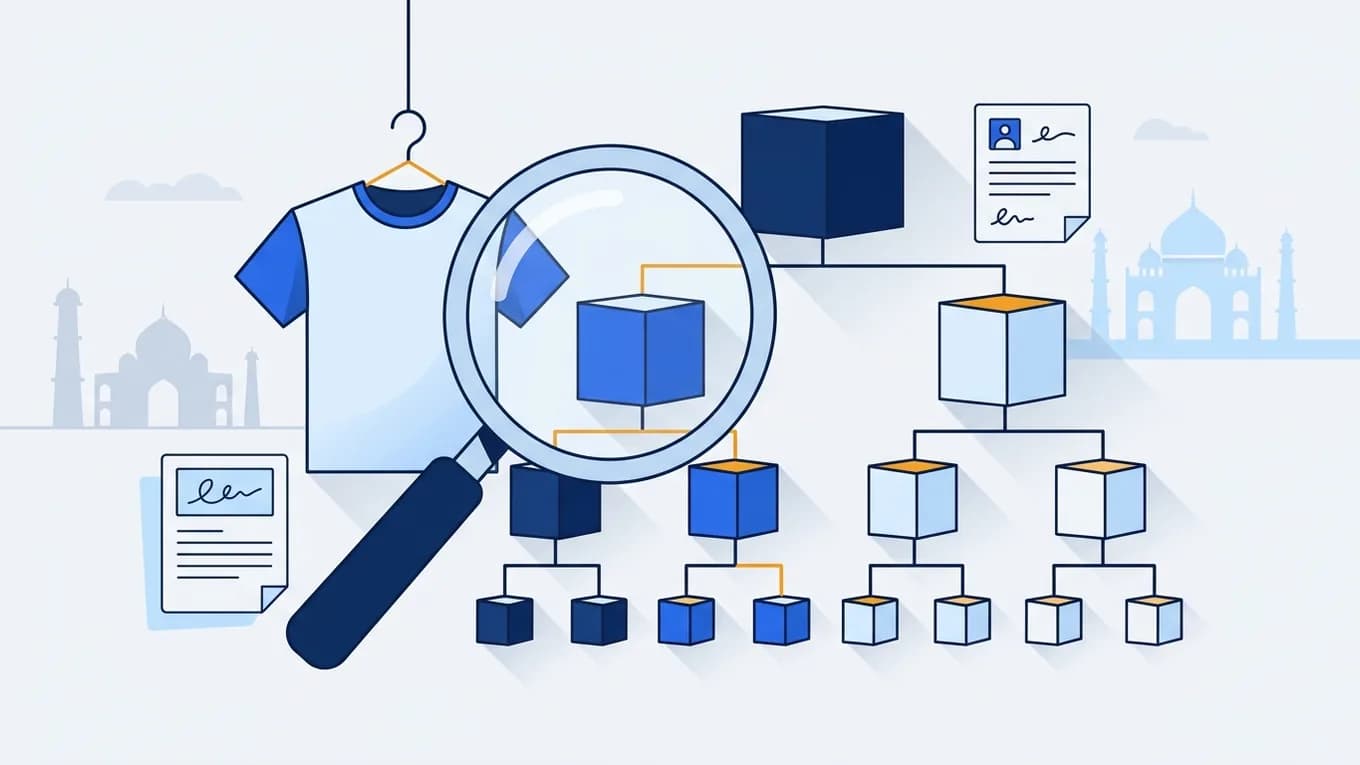
- Chapter 61: articles of apparel and clothing accessories, knitted or crocheted.
- Heading 6109: T-shirts, singlets and other vests, knitted or crocheted.
- Subheading 6109.10: of cotton. These 6 digits are the same in every country that uses the HS.
- India's tariff line 6109 10 00: the code customs, DGFT and GST use in India.
- A T-shirt of 60% cotton and 40% polyester also goes under “of cotton”: in mixed textiles, the fibre that weighs most decides.
When two codes seem to fit
The General Rules for the Interpretation of the Harmonized System, which India's Customs Tariff follows, settle most doubts. When goods could go under two or more headings, they apply in this order:
- The heading with the most specific description is preferred to one with a more general description.
- Mixtures, goods made of different materials or parts, and sets put up for retail sale go by the material or part that gives them their essential character.
- If neither settles it, the heading that comes last in numerical order wins.
Still unsure? Ask your CHA or a customs consultant; classifying goods is their daily work. For an answer customs must follow, apply to the Customs Authority for Advance Rulings (CAAR) before you import or export. An IEC holder can apply, and besides classification CAAR can rule on questions such as the valuation and the origin of the goods. The ruling binds you, and the customs officers who deal with you, on that question until it expires or the law or the facts change.
Mistakes to avoid
Watch out: The mistake people make is copying the code from the supplier's invoice. Its first 6 digits may be right, but the last 2 belong to the supplier's country, not India, and you answer to Indian customs for the code you declare.
- Choosing the code with the lowest duty. Customs can reassess the duty on a wrong code and impose penalties.
- Going by the product's name and skipping the section and chapter notes. A note can send a product to a different chapter from the one its name suggests.
- Using one code for every variant. A different material, use or finish can mean a different code.
- Checking once and never again. Rates and rules for a code change by notification, so check the live tool before each new order.
In short
- The first 6 digits of an HS code are shared worldwide; India's 8-digit code sets the duty, the trade policy and the GST rate.
- Work down from chapter to heading to subheading to the 8-digit line, reading the section and chapter notes on the way.
- When two headings fit, the most specific wins, then essential character, then the last in numerical order.
- For a binding answer before you trade, apply to the Customs Authority for Advance Rulings.
Try it on our data
Check yourself
Words in this lesson
Sources
- WCO: General Rules for the Interpretation of the Harmonized System
- WCO: HS 2022, Section XI notes (textiles)
- CBIC: Customs Act, 1962 (advance rulings, sections 28E to 28J)
- CBIC: Customs (tariff and advance rulings)
Facts checked against these sources on
Trade Academy is education, not legal, tax or customs advice. Rules and rates change by notification: check the live source, or ask a licensed customs broker, before you act.